
I’m Coming Back
And still ready to radicalize

I’M COMING BACK. I have been absent from this space for quite a while.
In July 2024, I created Free to Write: Transforming Community Writing Workshops with Radical Strategies. My original intention was to share my ideas of radicalizing the teaching of creative writing in community spaces. My years of workshops across the globe and in the US with non-academic writers provided an understanding that the language and the methodology of the academy do not necessarily correspond with the needs of a community writing workshop.
Programs in universities and other institutions rely on a shared language and an alignment with a culture formed by the creative writing establishment for more than fifty years. The writers/students participate in programs that have been formalized and standardized and have behavior guidelines and tacit rules that have evolved over generations. The programs are housed in institutions that regulate the programs. When students attend to workshops in universities, they have expectations – guidance, learning, exchange. These programs have successfully shaped the literary terrain, sometimes over-prescribing trends, other times, introducing new ones.
But this is not the path for all writers. Nor should it be.
In my Free to Write Substack, I intended to provide a lens on how these institution-based pedagogies (even the new inventive ones) may need some rethreading, reimagining, perhaps even dismantling to appeal to community workshop participants. I was excited to share my ideas and observations. I had ideas for 29 chapters!
In the initial entry, I revealed my guiding principle: I want to shape a workshop with a culture of generosity, based in justice, to create transformational moments, and ultimately deliver on the promise of creating a space to write, be seen, and heard. And ultimately give the participants the writers’ tools to make the experience worthwhile on all levels. We need spaces where voice is valued, where there is no harm. Community writing workshops include the unreachable and hesitant. They are designed to open language rather than regulate it.
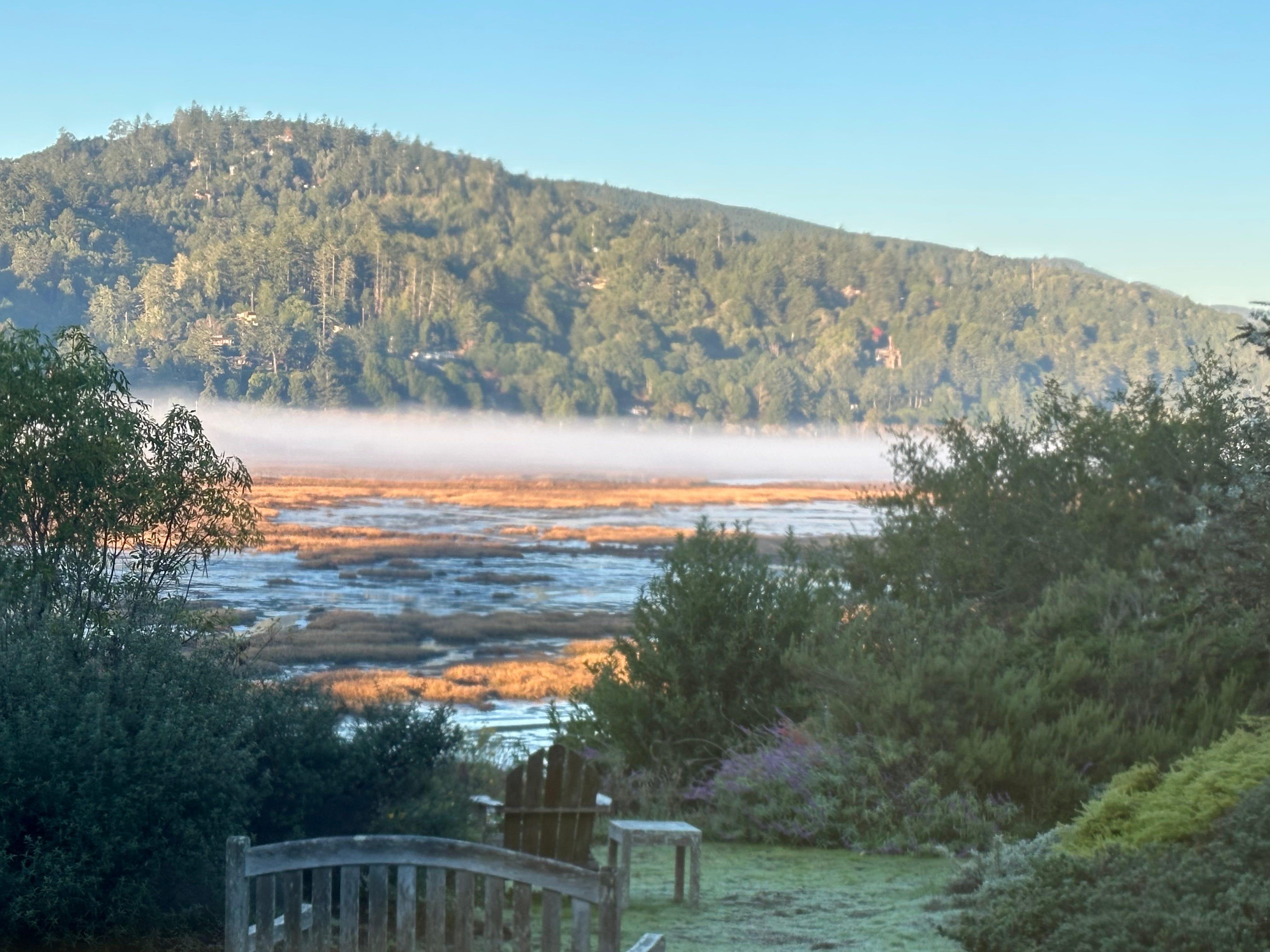
This cannot be done without honoring the writers in the room, without seeing how they interact with the world, whether the world is their family, community, job, or culture. I wanted to open their sense of freedom around writing (and talking about it) rather than the fear of exposure and failure. The freedom means the emotional currents are recognized, the fluidity of language is admired and form is fluid.
WHAT HAPPENED? After I had a few entries, pages of outlines and ideas, transcripts of interviews with twenty-two colleagues who teach in many spaces, prompts, classroom ideas etc., what?
After all that planning, the project stalled. Why couldn’t I find the momentum that built the resource materials, developed the chapters, and transcribed the interviews? The answer is simple: my heart got broken, more than once.
1. That same year I was initiating the Free to Write Substack, Trump was elected. His mandate to dismantle DEI destroyed the thrust toward inclusion. I say “thrust” because the literary world, like many fields, was still at the starting gate of these efforts. My mission in the community workshops was directed primarily toward writers of color. With the literature of people of color of LGBTQ+ writers being removed from shelves and the programs being not only shuttered but reviled, the terrain of writing about “free” to write was destroyed. It became farcical.
2. The capitulation of universities to the administration’s directives (even before they were asked). Just recently, on April 22, 2026, University of California at Berkeley stripped the walls of the Multicultural Center of its art including images of Dr. Martin Luther King. Long before this, many universities dismantled their Gender and Ethnic Studies Programs and continue to. Many of these closures were preemptive. The administrators anticipated that the Trump administration would pull funding, threaten the faculty, perhaps dictate all the curriculum. My own university (Northeastern) rushed to change the Diversity, Justice, and Inclusion Committee to the Committee of Belonging (which harshly smacks of an invitation-only vibe).
The universities dropping to their knees so rapidly sent a shiver down my spine, paralyzing my work. The irony was my work was directed to non-academic spaces, but the symbolism was daunting. Despite my mission to seed communities with writers through workshops, they are also a response to the existence of the Academy. Universities, for better or worse, have always been the vanguards of free-thinking, innovative research, policy design, and stages of debate. Although they are formalized and often limited in their thinking, ideas happen. When they kowtow to the politics of any administration, at any time, they become tools of the state.
We have seen the universities under siege before, but protest and rebellion have been part of the culture. In my lifetime they often served as the stage for not only protests and actions, but they are also places where the debates took place. From the Vietnam War and Civil Rights to the Antifa Movement, #Me Too, and Free Palestine, the actions in the street, the conversations in the halls, made it into the classrooms—and the curriculum of Black Studies (African American Studies), Gender Studies, Ethnic Studies, Public Policy, reflected the concerns of the street.
Currently, dissension, protest, and social media postings have consequences, dire consequences, as we see from the prosecution of peaceful student protestors in the last few years. Students have been injured by cops, expelled from their universities and denied their degrees. Faculty have been dismissed after exercising their free speech in opposition to the administration’s policies. In addition, we see dogged and relentless pursuit of their guilt, even after the cases have been thrown out of court.
This vendetta has targeted primarily protestors against the genocide in Gaza which brings me to my third heartbreak.
3. The genocide in Gaza, the rising violence in the West Bank against Palestinian residents, and the systemic and ongoing destruction of Lebanon. Among the disasters around the world, these affect me the most. The United States is bankrolling the extermination of a people, the seizure of land, the displacement of millions, and the imprisonment and torture of innocent people of all ages. This has been my spiritual dying. How, I asked myself, could I write about the freedom to write, when we don’t have the freedom of home, of identity and of familyhood? When those people are my people, the blade pierces more deeply, and the bleeding doesn’t stop. But my writing did—for nearly eight months, I could not generate a word
.
4. Ice Raids. The abduction of thousands of people across the US, their incarceration in sub-human conditions and the fear that has spread in our country, affected my work and the power writing and workshops have in this atmosphere. I find it hard to insist that each story is valuable; each story is unique and provides meaning when the government has stolen the individuality of the victims of ICE. When little children absorb the violence and disorientation of incarceration, when parents lose sight of their families and live in the despair of unknowing (or worse, imagining), when a field worker or day care counselor are shipped to places where they are lost, the stories are disrupted; their humanity, their personhood has been removed.
Writing provides nuanced and important lenses, that are not always recognized in the news, media or mainstream literature. The languages we know and ones we create become spoken. The memory in our cells and skin take shape into histories. The world viewed through the perspectives of generations of history collide into a story, a poem, a cartoon, a memoir, a triptik, a dream, that is offered to the world.
I wanted to believe in the value of these efforts and continue to create opportunities that have their own democracy. The erasure of individual stories, the propaganda reshaping personal narrative, the loss of whole communities physically, emotionally, and socially, marginalizes these writers, scattered in communities, even more.
5. AI presents a dilemma. Its unethical surfacing by shredding millions of books, indicates a devaluing of writing in its original form—it reduces writing as fodder for a bot. It is generated by powers that are blind to the margins, the dispossessed and unrecognized. The kingdom of Silicon Valley is privileged mostly white or white-centric and works for mass consensus.
AI has no boundaries, no regulations, often spurring violent and frightening images, films, words. The exploitation of its powers has disrupted the ability to distinguish what is true or what is original. For many, the regard for original writing has diminished, because Claude is better. The temptation of checking your work with the efficient and eloquent computer is almost too hard to resist—so why bother writing? Yes, it’s a fact of life—I know there is not going back from AI, but as an advocate of creativity, I am still forming my engagement with it, for me and those I teach.
A lot of time has passed since my last entry, Radical Leadership. (January 1, 2025)
The silence self-imposed upon my work lasted until the Spring of 2025. I got back to work on projects that had been interrupted by this paralysis. I finished the two books I had started years before. One a novel of love and war (Almost a Life) and a book of poetry that follows those who have been displaced (Life Cycles of the Lost)—they are both looking for homes. In a way, working on my projects has cleansed my palate, a little. The bad news persists, each day a new calamity of greed and domination is performed. We are in a live dystopian circus.
What do we do?
Yesterday I read work written by my students in my summer class, Creative Writing and Social Impact at Northeastern University. It’s an asynchronous class, so the joy of workshop interacting and exchange is absent. At first, their reading responses felt like AI regurgitations. The writing was so boring. I jumped on my high horse and did a video about voice and originality and making mistakes as part of the process. They got better.
The real revelation came with their first creative writing assignment. In a nutshell, I asked them to write a pattern poem that worked as an origin story. A soft entry into writing—a little bit of visual, some reflection on the self, and creation of a whole new piece.
As I opened each google doc, my breathing changed. Poems in the shape of hearts, the state of Massachusetts, one scattered across the page like rain. Longings for Kuwait and homage to Colombia.
That wire that screwed into my nervous system two years ago loosened. My breath filled my chest. Regulated my heart a bit.
Even in these gruesome times, we have a readiness to tell our stories, maybe more than ever? Feels like it. The students had only a few days to realize their idea. They responded with remarkable fluidity, as if they had been waiting for someone to ask. Most of them have lived only about twenty years. And yet, they saw something historical in their own lives, something that could contribute to the saga of this time. I’m here for it, for them.
I feel a bit of a jerk. Voices are being silenced more than ever. This is the time I choose to walk away from my lifelong project of bringing writers in from the margins? This is the moment I let the unheard sit in silence?
I realize that my little substack isn’t so powerful that its existence empowers the voices we need. But look, aren’t I being just like those cowardly universities, dropping my head too soon? Part of it was about my own struggle with the suffering in the world, but I don’t want to defend myself or make excuses. Throughout my life, my work to promote writers of color has been done without fanfare and with little attention, but it satisfied something that kept me healthy. A good dose of empowering others to keep my heart in check.
That’s what I can do about this broken heart, I realize. Return to this space and offer my experiences, my knowledge and a bit of bossiness. Not a cure—the broken heart is an element in this plan. The fracture pushes me to connect and contribute.
So welcome back to me and my heart. Gathering all my materials and digging back in. Soon you will read how we find our intuitive leadership style, and some back pocket strategies and so much more. Because I am determined to resurrect the mission, to open the way for more voices. To humbly hope my efforts make a difference in how we reflect on our world.
Watch this space because I’m still about Radicalizing Community Writing Workshops. See you soon.
Thank you for this piece Elmaz and your energy and intention!
So excited to see you in this space!